

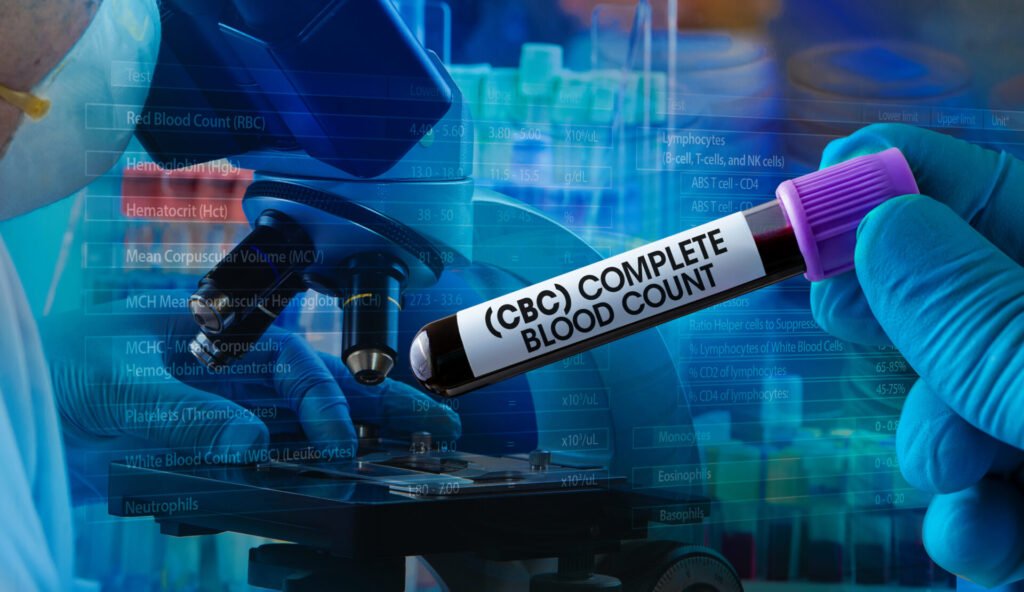
You get your CBC report back, and it’s a wall of abbreviations — Hb, WBC, RBC, PLT — with numbers next to each one and no real explanation. I’ve been there, and honestly, most people just skim past it and wait for the doctor to explain. But knowing the basic CBC test normal range actually helps you ask better questions and understand your own body a little better. Let’s go through it, section by section, without the medical jargon overload.
What Exactly Is a CBC Test?
A Complete Blood Count, or CBC, is one of the most commonly ordered blood tests in India — practically every annual checkup includes one. It measures different components of your blood: red blood cells, white blood cells, platelets, and a few related values.
Doctors use it to check for anemia, infections, clotting issues, and general health status. It’s cheap too — usually ₹300 to ₹600 depending on the lab.
Understanding Hemoglobin (Hb) Levels
Quick Answer: The normal CBC test normal range for hemoglobin is roughly 13.5-17.5 g/dL for men and 12-15.5 g/dL for women. Lower values often indicate anemia, while higher values can point to dehydration or other conditions.
Low hemoglobin is incredibly common in Indian women, partly due to diet and partly due to menstrual blood loss. If your Hb is consistently below 11, it’s worth discussing iron-rich foods or supplements with your doctor. [link to related guide about iron rich foods here]
White Blood Cell (WBC) Count Explained
WBCs are your immune system’s soldiers. The normal range typically falls between 4,000 to 11,000 cells per microliter of blood.
- High WBC count: often points to infection, inflammation, or sometimes stress
- Low WBC count: could indicate a viral infection, certain medications, or in rare cases, bone marrow issues
I’ve noticed doctors don’t panic over a WBC count that’s slightly elevated during a cold or flu — that’s actually your body doing exactly what it should.
Platelet Count (PLT) and Why It Matters
Platelets help your blood clot. The normal CBC test normal range for platelets is generally 150,000 to 450,000 per microliter.
During dengue season especially, this number gets watched closely. A count dropping below 100,000 often means hospital monitoring, and below 20,000 usually needs immediate medical attention.
Red Blood Cell (RBC) Indices
This section confuses people the most, with terms like MCV, MCH, and MCHC. In simple terms:
- MCV (Mean Corpuscular Volume) — tells you the average size of your red blood cells
- MCH (Mean Corpuscular Hemoglobin) — average amount of hemoglobin per cell
- MCHC — concentration of hemoglobin in the cells
These help doctors figure out the type of anemia, if any — whether it’s iron deficiency, vitamin B12 deficiency, or something else entirely. This distinction matters a lot for treatment.
When Should You Actually Worry?
Not every abnormal value is a red flag. A single test slightly outside the normal range, especially if you were sick recently or dehydrated, isn’t usually cause for panic.
Has this happened to you — a slightly high or low number sends you into a Google spiral at midnight? Try not to. Context matters more than the number alone, and only your doctor has that full context.
Reasons to actually follow up quickly:
- Multiple values significantly outside range
- Symptoms alongside abnormal results (fatigue, bruising, fever)
- A doctor specifically flagging it for repeat testing
How Often Should You Get a CBC Done?
For a generally healthy adult, once a year during a routine checkup is reasonable. If you have a chronic condition, are on certain medications, or are pregnant, your doctor might recommend it more frequently — sometimes every few months.
Frequently Asked Questions
What is a normal CBC range for a healthy adult? It varies by component, but broadly, hemoglobin 12-17.5 g/dL, WBC 4,000-11,000, and platelets 150,000-450,000 are considered within the standard CBC test normal range.
Can stress affect CBC results? Yes, stress and even recent exercise can slightly raise WBC counts temporarily, which is why timing and context matter when interpreting results.
Is a CBC test enough to detect all diseases? No, it’s a general screening tool. It can point toward issues but usually needs follow-up tests for a specific diagnosis.
Why is my hemoglobin low but everything else normal? This often points toward simple iron deficiency anemia, especially common in Indian women, but B12 or folate deficiency can also cause it.
Does fasting affect CBC test results? Generally no, CBC doesn’t require fasting, unlike blood sugar or lipid profile tests, though your lab may combine tests and ask you to fast anyway.
What does a high platelet count mean? It can indicate inflammation, iron deficiency, or in some cases, be a reaction to infection — it’s usually not alarming on its own without other symptoms.
Final Thoughts
Understanding the CBC test normal range doesn’t make you a doctor, but it does make you a more informed patient — someone who can ask sharper questions and catch things early. Next time your report comes back, don’t just fold it and file it away. Take five minutes, compare the numbers, and if anything looks off, bring it up at your next appointment instead of waiting for the annual one.