
Your child feels warm, you grab the thermometer, and suddenly you’re wide awake calculating whether this needs an emergency room visit or just some rest and fluids. Knowing exactly child fever when to worry genuinely reduces that panic, because most fevers, honestly, resolve on their own with basic care at home.
What Actually Counts as a Fever in Children?
A temperature of 100.4°F (38°C) or higher is generally considered a fever in children. It’s worth noting that fever itself is a normal immune response — your child’s body fighting off infection — not inherently dangerous on its own.
Fever by Age: Why It Matters More for Younger Babies
Quick Answer: For child fever when to worry, age matters significantly — any fever in a baby under 3 months old (100.4°F or higher) requires immediate medical attention, since infants’ immune systems are still developing and can deteriorate quickly.
- Under 3 months: any fever needs urgent medical evaluation
- 3-6 months: fever above 101°F warrants a doctor’s call
- 6 months and older: general guidelines below apply, with more flexibility
I’ve noticed new parents especially panic over any temperature reading, which is understandable, but knowing this age-based distinction genuinely helps calibrate the actual urgency level.
Signs That Warrant Immediate Medical Attention
Regardless of the exact temperature, certain accompanying symptoms mean you shouldn’t wait:
- Difficulty breathing or unusually rapid breathing
- A stiff neck or severe headache
- Persistent vomiting or signs of dehydration
- A rash that doesn’t fade when pressed
- Unusual drowsiness, difficulty waking, or extreme irritability
- A seizure, even brief
Picture a toddler with a fever who’s still playing, eating reasonably, and drinking fluids normally — that’s a very different situation from one who’s limp, unresponsive, or inconsolable. The overall behavior matters as much as the number on the thermometer. [link to related guide about picky eater child diet tips here]
When It’s Usually Safe to Manage at Home
For most fevers in children over 6 months, without the warning signs above, home care is often appropriate:
- Fever below 102°F, child is alert and drinking fluids
- No difficulty breathing or unusual symptoms
- Child is uncomfortable but responsive and interactive
Has this ever happened to you — a fever spikes in the evening and you’re debating whether it can wait until morning? If your child is otherwise behaving normally between fever spikes, drinking fluids, and responsive, it’s generally reasonable to monitor overnight and consult a doctor the next day if it persists.
How to Manage a Fever at Home Safely
- Keep your child hydrated with water, ORS, or clear fluids
- Dress them in light clothing, avoid heavy layers or blankets
- Use paracetamol as per pediatrician-recommended dosing for age and weight
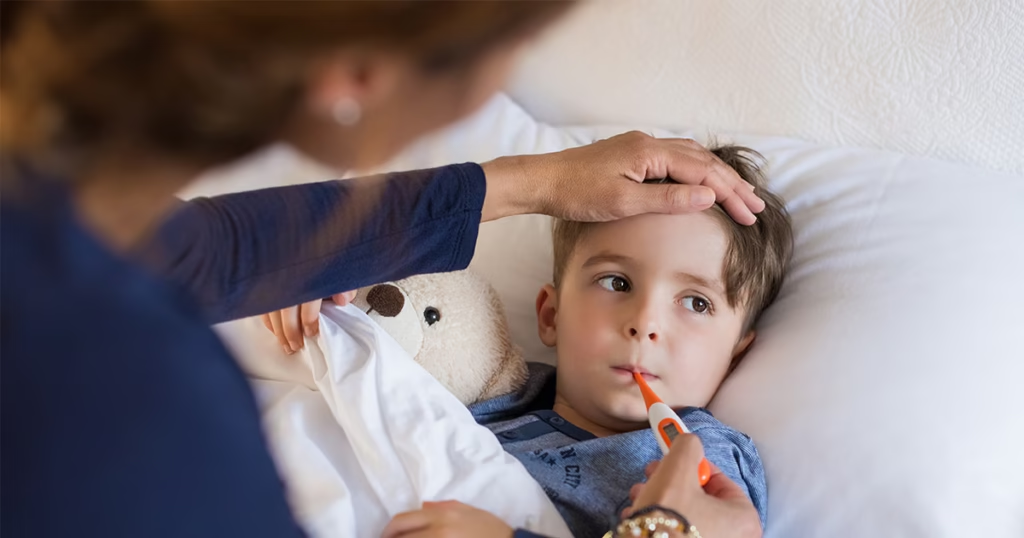
- Monitor temperature every few hours, but don’t obsessively recheck every 20 minutes
- Ensure adequate rest
When Fever Duration Becomes a Concern
A fever lasting more than 3 days, even if it seems mild, generally warrants a doctor’s visit to rule out underlying infections that might need specific treatment, like a bacterial infection requiring antibiotics.
Common Mistakes Parents Make With Fever Management
- Over-bundling a feverish child, which can actually worsen the temperature
- Alternating fever medications incorrectly without proper dosing gaps
- Waking a sleeping child just to check temperature repeatedly
- Panicking over the number itself rather than the child’s overall behavior
Frequently Asked Questions
At what temperature should I take my child to the doctor? For babies under 3 months, any fever warrants immediate care. For older children, understanding child fever when to worry means watching for fever above 102-103°F combined with other concerning symptoms.
Is a fever without other symptoms dangerous in children? Usually not, especially in children over 6 months who remain alert and hydrated — fever alone, without other symptoms, is often the body’s normal immune response.
How long can a child’s fever last before it’s concerning? A fever lasting more than 3 days, or one that keeps returning after resolving, generally needs medical evaluation to rule out an underlying infection.
Should I wake my sleeping child to give fever medicine? Generally no, unless specifically advised by a doctor — sleep is genuinely valuable for recovery, and waking a peacefully sleeping child isn’t usually necessary.
Can teething cause a fever in babies? Teething can cause a very mild temperature rise, but a true fever above 100.4°F is usually due to something else and shouldn’t be automatically attributed to teething.
What’s the fastest way to reduce a child’s fever at home? Age-appropriate paracetamol dosing, light clothing, adequate fluids, and a comfortably cool room all help, though the goal is comfort rather than rushing the temperature to normal instantly.
Final Thoughts
Understanding child fever when to worry takes away a lot of that middle-of-the-night panic every parent knows well — most fevers are manageable at home, and the specific warning signs above tell you clearly when it’s time to seek help instead. Keep a basic thermometer and pediatrician-approved fever medicine on hand, trust your observation of your child’s overall behavior, and don’t hesitate to call your pediatrician’s helpline if something feels genuinely off.