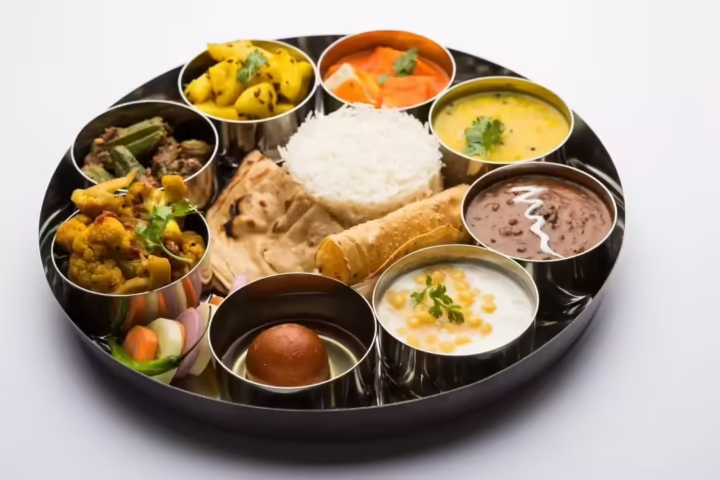

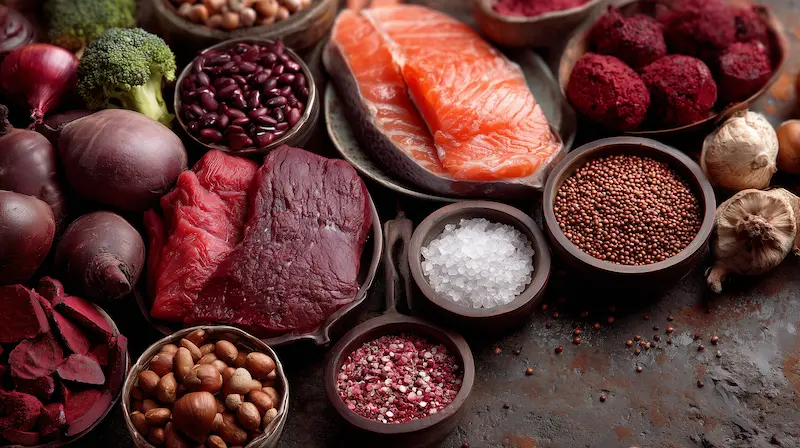
Low iron is one of the most common, and most overlooked, reasons people feel exhausted — especially women in India, where iron deficiency anemia rates remain notably high. Before jumping straight to supplements, it’s worth looking at iron rich foods you can genuinely build into your everyday meals. Small dietary shifts, done consistently, make a real difference.
Why Iron Deficiency Is So Common in India
A combination of factors contributes to this — diets heavy in cereals and light in iron-absorbable foods, menstrual blood loss in women, and sometimes poor absorption due to excess tea or coffee consumption around mealtimes. It’s genuinely one of the most common deficiencies doctors see here.
Plant-Based Iron Rich Foods
Quick Answer: The best plant-based iron rich foods include spinach, sesame seeds, jaggery, and legumes like chana and rajma — though plant iron (non-heme) absorbs less efficiently than animal sources, so pairing with vitamin C helps significantly.
- Spinach (palak): roughly 2.7mg iron per 100g cooked
- Sesame seeds (til): about 14mg iron per 100g
- Jaggery (gur): roughly 11mg iron per 100g
- Chickpeas: around 6.2mg iron per 100g cooked
I’ve noticed a lot of people eat spinach thinking it alone solves iron deficiency, but the absorption rate from plant sources is genuinely lower than most people realize — which is exactly why the next section matters so much.
Animal-Based Iron Rich Foods (For Non-Vegetarians)
Heme iron, found in animal products, absorbs far more efficiently than plant iron — sometimes two to three times better.
- Red meat (mutton) — around 2.7mg per 100g
- Chicken liver — significantly higher, around 9mg per 100g
- Eggs — moderate iron content, better absorbed than plant sources
- Fish — varies by type, generally moderate iron content
The Vitamin C Pairing Trick
This is genuinely the most underrated tip for anyone trying to fix iron levels through diet. Vitamin C dramatically increases non-heme iron absorption — sometimes by up to 3-4 times.
Picture someone eating a plain spinach sabzi versus the same spinach sabzi with a squeeze of lemon on top — that small addition meaningfully changes how much iron your body actually absorbs.
Simple pairings:
- Add lemon juice to dals and sabzis
- Eat citrus fruits alongside iron-rich meals
- Pair spinach with tomatoes, which are naturally vitamin C rich
What Blocks Iron Absorption?
Some common Indian habits unintentionally reduce iron absorption:
- Drinking tea or coffee immediately with or after meals (tannins block absorption)
- Excessive calcium supplements taken alongside iron-rich meals
- High-fiber, high-phytate diets without enough vitamin C balance
Try shifting your chai to at least an hour after meals rather than right alongside them — it’s a small habit change with a real impact. [link to related guide about vitamin d deficiency symptoms here]
Building an Iron-Rich Day of Meals
- Breakfast: Ragi porridge with jaggery
- Lunch: Rajma or chana with rice, a squeeze of lemon
- Snack: Roasted sesame seed and jaggery laddoo (til gur laddoo)
- Dinner: Spinach and tomato sabzi with roti
This kind of day, done consistently over weeks, genuinely supports better iron levels without needing supplements for mild deficiency.
When Diet Alone Isn’t Enough
For moderate to severe anemia, confirmed through a blood test, diet changes alone usually aren’t sufficient — supplements or medical treatment become necessary. Diet works well for prevention and mild cases, but don’t rely on it alone if your Hb levels are significantly low.
Frequently Asked Questions
What foods are highest in iron for vegetarians? Sesame seeds, jaggery, spinach, and legumes like chana and rajma are among the most effective iron rich foods for vegetarians, especially when paired with vitamin C.
Can I get enough iron without eating meat? Yes, though it requires more intentional planning — combining plant iron sources with vitamin C-rich foods significantly improves absorption for vegetarians.
Does tea reduce iron absorption? Yes, the tannins in tea and coffee can reduce iron absorption by up to 50% if consumed close to meals, so spacing them out by an hour or more helps.
How long does it take for iron rich foods to improve energy levels? Mild improvements can show within 2-4 weeks of consistent dietary changes, though full correction of deficiency, especially confirmed anemia, usually takes longer and may need supplements.
Is jaggery really a good source of iron? Yes, jaggery contains meaningful iron content and is a traditional Indian remedy for mild iron deficiency, though it shouldn’t replace medical treatment for confirmed anemia.
What are signs of low iron levels? Fatigue, pale skin, dizziness, brittle nails, and shortness of breath during regular activity are common signs worth getting checked with a simple blood test.
Final Thoughts
Building more iron rich foods into your daily meals is a genuinely simple, low-cost way to support your energy levels, especially for mild deficiency. Pair plant sources with vitamin C, space out your chai from mealtimes, and be consistent rather than expecting overnight results. If you’ve been feeling unusually tired lately, maybe start with tomorrow’s lunch — add that squeeze of lemon to your dal and see how the week goes.