
Getting a PCOS diagnosis can feel overwhelming, especially with so much conflicting advice online about what to eat. A well-structured PCOS diet plan genuinely helps manage symptoms — insulin resistance, weight fluctuations, irregular cycles — though it’s not about extreme restriction or crash dieting. Let’s break down what actually works.
Why Diet Matters So Much for PCOS
PCOS is closely tied to insulin resistance in most cases, meaning your body doesn’t respond to insulin as efficiently, which can lead to higher blood sugar, weight gain, and worsened hormonal symptoms. A well-planned diet directly targets this underlying mechanism, not just the surface symptoms. [link to related guide about irregular periods causes here]
The Core Principle: Low Glycemic Index Foods
Quick Answer: A PCOS diet plan built around low glycemic index (GI) foods — which release glucose slowly — helps manage insulin resistance more effectively than a standard low-calorie diet, since it directly addresses the hormonal root cause rather than just calorie counting.
Low GI swaps that genuinely make a difference:
- White rice → brown rice or millets (bajra, jowar, ragi)
- Regular roti → multigrain or ragi roti
- Sugary breakfast cereals → oats or besan chilla
- Potato-heavy meals → sweet potato in moderation, with protein
Protein: Non-Negotiable for PCOS Management
Adequate protein at every meal helps stabilize blood sugar and reduces cravings significantly. Aim to include a protein source at breakfast, lunch, and dinner — not just as an afterthought.
I’ve noticed a lot of women with PCOS skip breakfast or keep it very light (just tea and biscuits), which actually worsens blood sugar swings throughout the day. Starting with protein, like eggs, paneer, or moong dal chilla, makes a real difference.
Foods to Genuinely Limit
- Refined sugar — sweets, sugary drinks, packaged desserts
- Refined carbs — white bread, maida-based snacks
- Excessive dairy for some women (though this varies individually)
- Fried and processed foods, which increase inflammation
This doesn’t mean never having a sweet again — occasional treats are fine. It’s the daily, consistent intake that matters most for symptom management.
Anti-Inflammatory Foods to Add
PCOS is associated with low-grade chronic inflammation, so foods with anti-inflammatory properties can genuinely support symptom management:
- Turmeric (haldi) — a staple already in Indian cooking
- Fatty fish or flaxseeds for omega-3s
- Berries and colorful vegetables
- Nuts, particularly walnuts and almonds
Building a Sample PCOS-Friendly Day
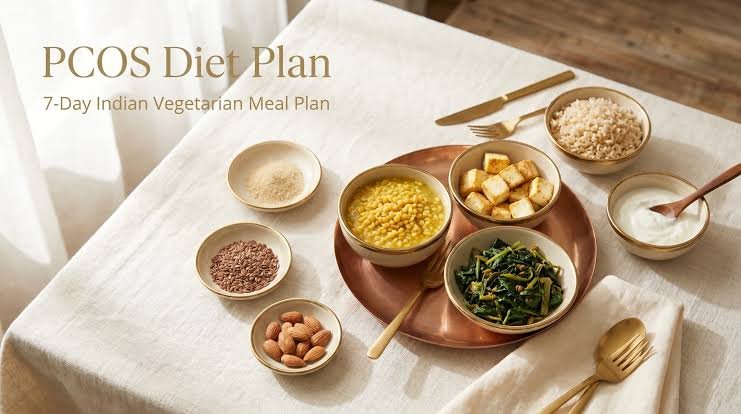
- Breakfast: Besan chilla with vegetables, or egg bhurji
- Mid-morning: A handful of almonds and walnuts
- Lunch: Brown rice or multigrain roti, dal, sabzi, curd
- Evening: Roasted chana or sprouts
- Dinner: Grilled paneer or fish with vegetables, light on carbs
The Role of Meal Timing
Picture someone eating a large gap between lunch and dinner, then overeating in the evening out of hunger — this pattern worsens insulin spikes. Eating smaller, more consistent meals throughout the day tends to support better blood sugar control for PCOS specifically.
Has this ever happened to you — skipping meals thinking it helps weight loss, only to end up overeating later? With PCOS, that pattern genuinely works against you more than with a typical metabolism.
Exercise Alongside Diet
Diet alone isn’t the full picture. Combining a PCOS diet plan with regular movement — strength training in particular has shown strong benefits for insulin sensitivity in PCOS — produces noticeably better results than diet changes alone.
Frequently Asked Questions
What foods should be avoided in a PCOS diet plan? Refined sugar, refined carbs like maida, fried foods, and excessive processed snacks are the main things to limit in an effective PCOS diet plan.
Can diet alone manage PCOS symptoms? Diet plays a major role, especially for insulin resistance and weight management, but combining it with exercise and, when needed, medical treatment offers the best results.
Is dairy bad for PCOS? It varies by individual — some women with PCOS find dairy worsens acne or bloating, while others tolerate it fine; it’s worth observing your own response.
How long does it take to see results from a PCOS diet plan? Many women notice improved energy and reduced cravings within 3-4 weeks, while changes in cycle regularity may take a few months of consistency.
Are millets good for PCOS? Yes, millets like bajra, jowar, and ragi have a lower glycemic index than white rice or refined wheat, making them a solid addition to a PCOS-friendly diet.
Does weight loss help with PCOS symptoms? Yes, even a modest 5-10% reduction in body weight has been shown to improve insulin sensitivity and menstrual regularity in many women with PCOS.
Final Thoughts
A sustainable PCOS diet plan isn’t about strict deprivation — it’s about consistently choosing lower-GI foods, prioritizing protein, and reducing inflammatory foods most of the time. Pair it with regular movement and patience, since hormonal changes take longer than typical weight loss timelines. Start with just swapping your breakfast tomorrow to something protein-rich and see how your energy feels by afternoon.