
Brushing and flossing get all the attention, but what you eat plays a genuinely bigger role in dental health than most people realize. I used to think as long as I brushed twice a day, my diet didn’t matter much for my teeth — turns out, that’s only half the picture. Let’s talk about actual foods for healthy teeth that support your enamel and gums from the inside.
Dairy Products: Calcium’s Best Friend
Quick Answer: Among the most effective foods for healthy teeth, dairy products like milk, cheese, and curd provide calcium and phosphate, which help remineralize enamel and neutralize acids in your mouth after eating.
Cheese in particular raises saliva pH, reducing the acidic environment that erodes enamel over time. A small piece of cheese after a meal genuinely helps more than people give it credit for.
Crunchy Fruits and Vegetables
Apples, carrots, and cucumbers aren’t just healthy in general — their crunchy texture stimulates saliva production, which naturally washes away food particles and bacteria.
- Apples: often called “nature’s toothbrush,” though this shouldn’t replace actual brushing
- Carrots: crunchy texture plus vitamin A, good for gum tissue
- Cucumbers: high water content, helps maintain saliva flow
I’ve noticed swapping an evening biscuit habit for a small bowl of cut cucumber or carrot makes a real, if subtle, difference over a few months.
Leafy Greens for Gum and Enamel Health
Spinach, methi (fenugreek leaves), and other leafy greens are packed with calcium and folic acid, both of which support healthy gum tissue and strengthen enamel over time. [link to related guide about iron rich foods here]
Picture adding a small portion of sautéed spinach to your regular dinner rotation — it’s a small habit that supports both dental and general health simultaneously.
Nuts and Seeds: An Underrated Category
Almonds, sesame seeds, and walnuts provide calcium and healthy fats without the sugar content that damages teeth. A small daily handful genuinely supports enamel strength over time.
- Almonds — calcium plus protein, good chewy resistance for jaw and gum stimulation
- Sesame seeds (til) — high calcium content, traditionally used in Indian sweets but also fine plain, roasted
- Walnuts — antioxidants that support overall oral tissue health
Green and Black Tea: A Surprising Ally
Both green and black tea contain polyphenols that can reduce bacterial growth and plaque formation in the mouth. That said, tea can stain teeth over time, so it’s a bit of a trade-off worth balancing with good brushing habits.
Has this ever crossed your mind — that your evening chai might actually be doing something beneficial for your teeth, beyond just comfort? It’s a nice little bonus, assuming you’re not adding excessive sugar to it.
Foods and Drinks to Genuinely Limit
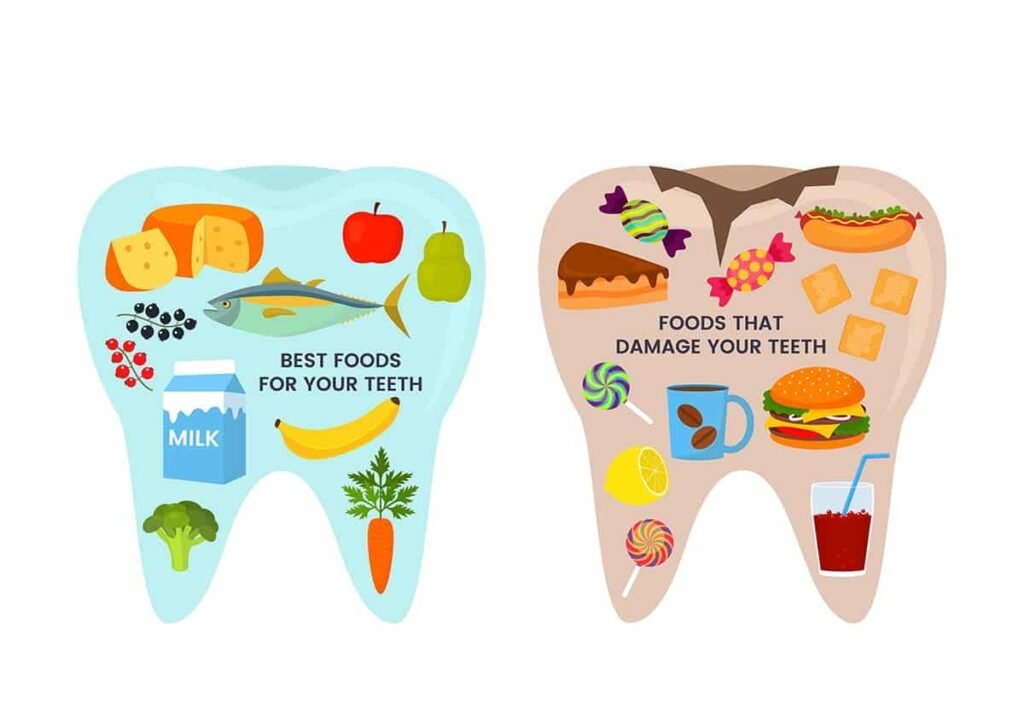
While focusing on foods for healthy teeth, it’s equally important to recognize what works against you:
- Sticky sweets like toffees that cling to teeth surfaces
- Frequent sipping of sugary drinks throughout the day
- Excessive citrus consumption without rinsing afterward (acid erosion)
- Ice chewing, which can crack enamel over time
Timing Matters Almost as Much as Choice
Snacking constantly throughout the day, even on relatively healthy foods, keeps your mouth in a more acidic state longer than eating structured meals with gaps in between. Try to space out snacks rather than grazing continuously, and rinse with water after eating something particularly sugary or acidic.
Frequently Asked Questions
What foods naturally strengthen tooth enamel? Dairy products, leafy greens, and nuts are among the most effective foods for healthy teeth, providing calcium and phosphate that support enamel remineralization.
Does eating cheese actually help your teeth? Yes, cheese raises the pH in your mouth after eating, reducing acid erosion and providing calcium that supports enamel strength.
Are apples really good for dental health? Yes, though more for stimulating saliva flow and gently cleaning surfaces than actually replacing brushing — it’s a helpful habit, not a toothbrush substitute.
Can diet reverse early tooth decay? In very early stages, before a cavity forms, improved diet and remineralizing foods combined with good oral hygiene can sometimes reverse initial enamel demineralization.
Is green tea good or bad for teeth? Generally good, thanks to its plaque-reducing polyphenols, though it can cause staining over time — rinsing with water afterward helps minimize that.
What foods should I avoid for healthy teeth? Sticky sweets, frequent sugary drink sipping, and excessive acidic foods without proper rinsing are the main things to watch, alongside regular sugary snacking throughout the day.
Final Thoughts
Good dental health isn’t just about your brushing routine — the right foods for healthy teeth genuinely support your enamel and gums from within, working alongside good hygiene rather than replacing it. Start small: add a handful of nuts or a piece of cheese to your day, cut back on sticky sweets, and space out your snacking. Your next dental check-up might just go a little smoother because of it.